
DREAM HAUS
location : donggyo-dong, mapo-gu, seoul
program : share house
photo : Yousub Song
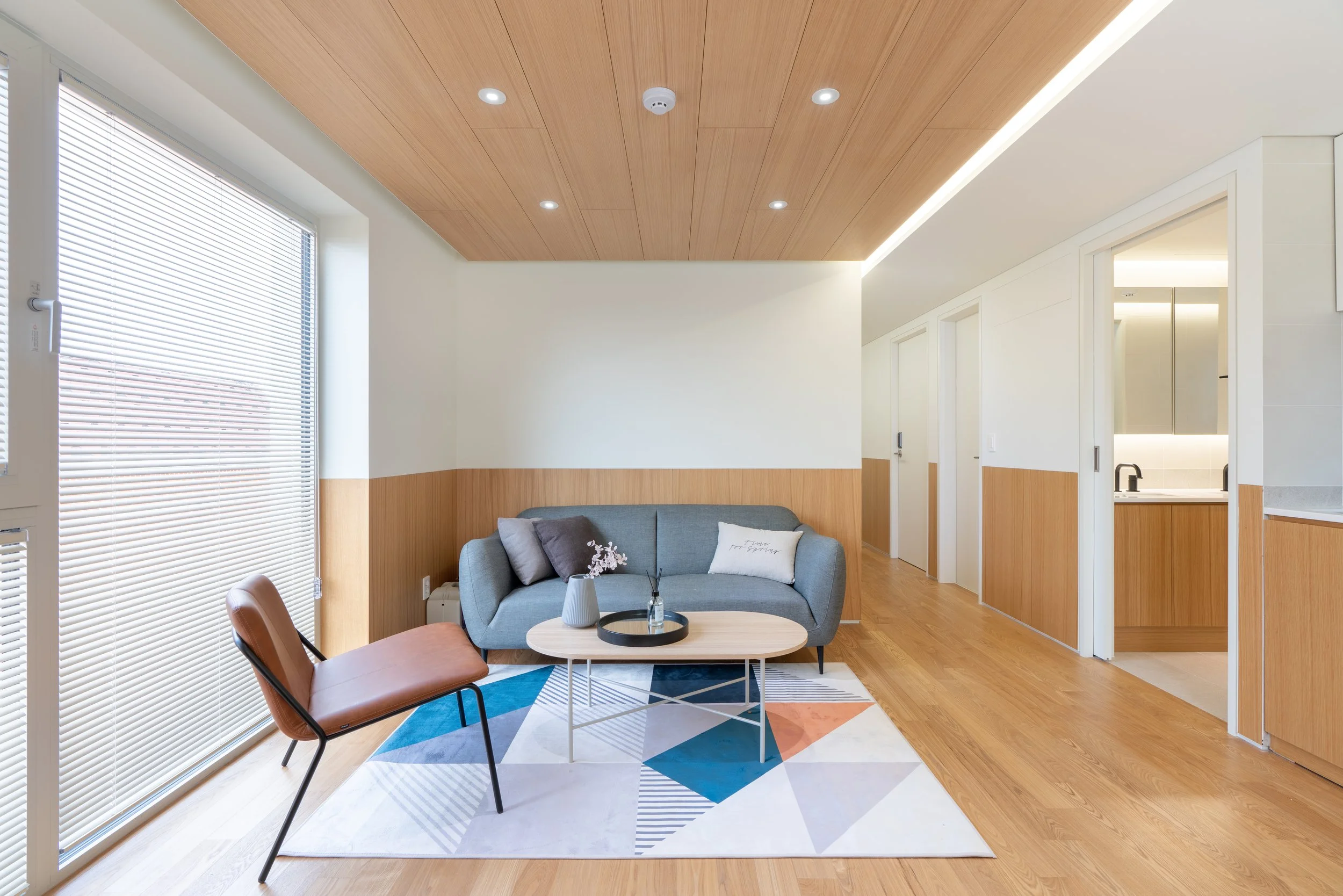
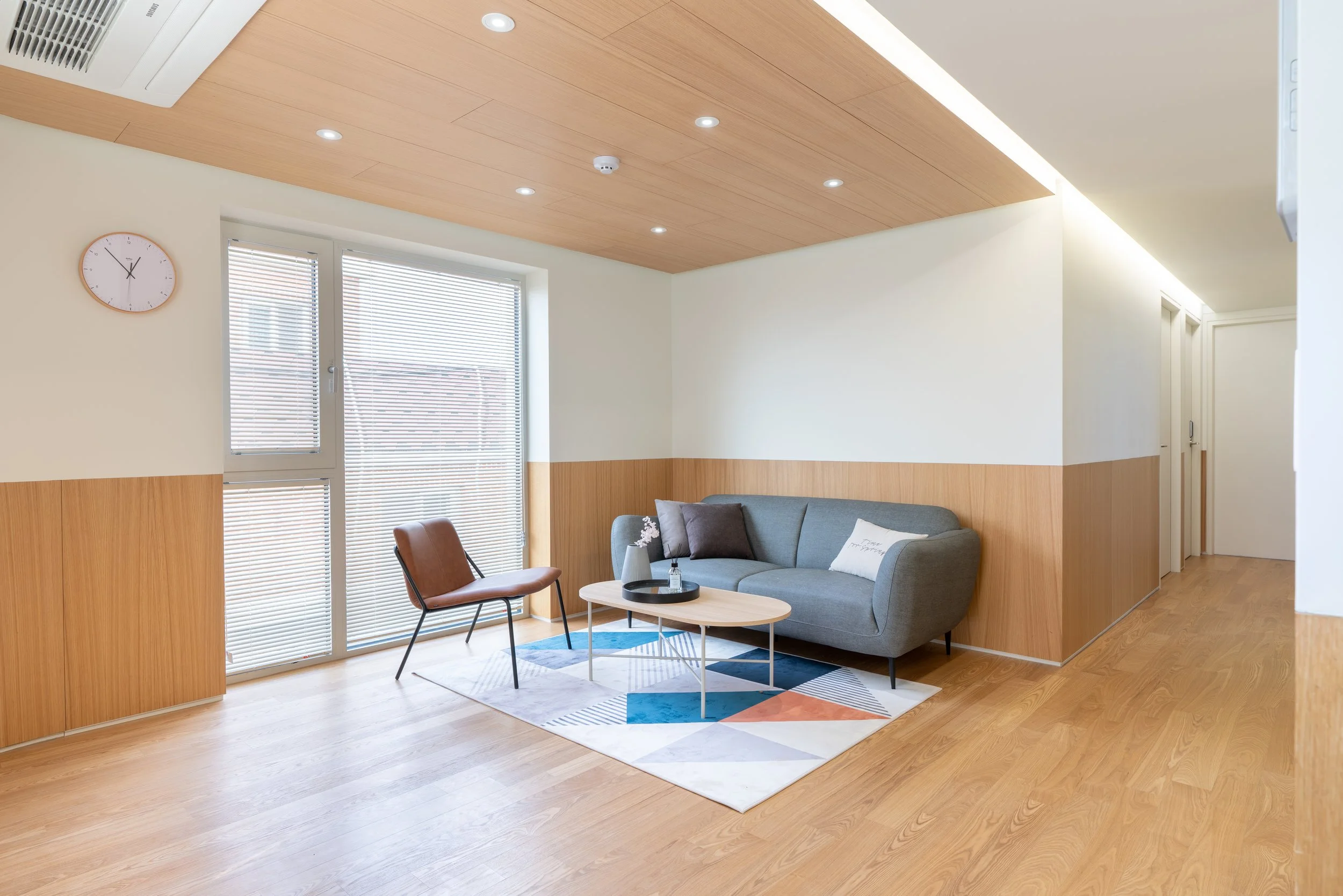
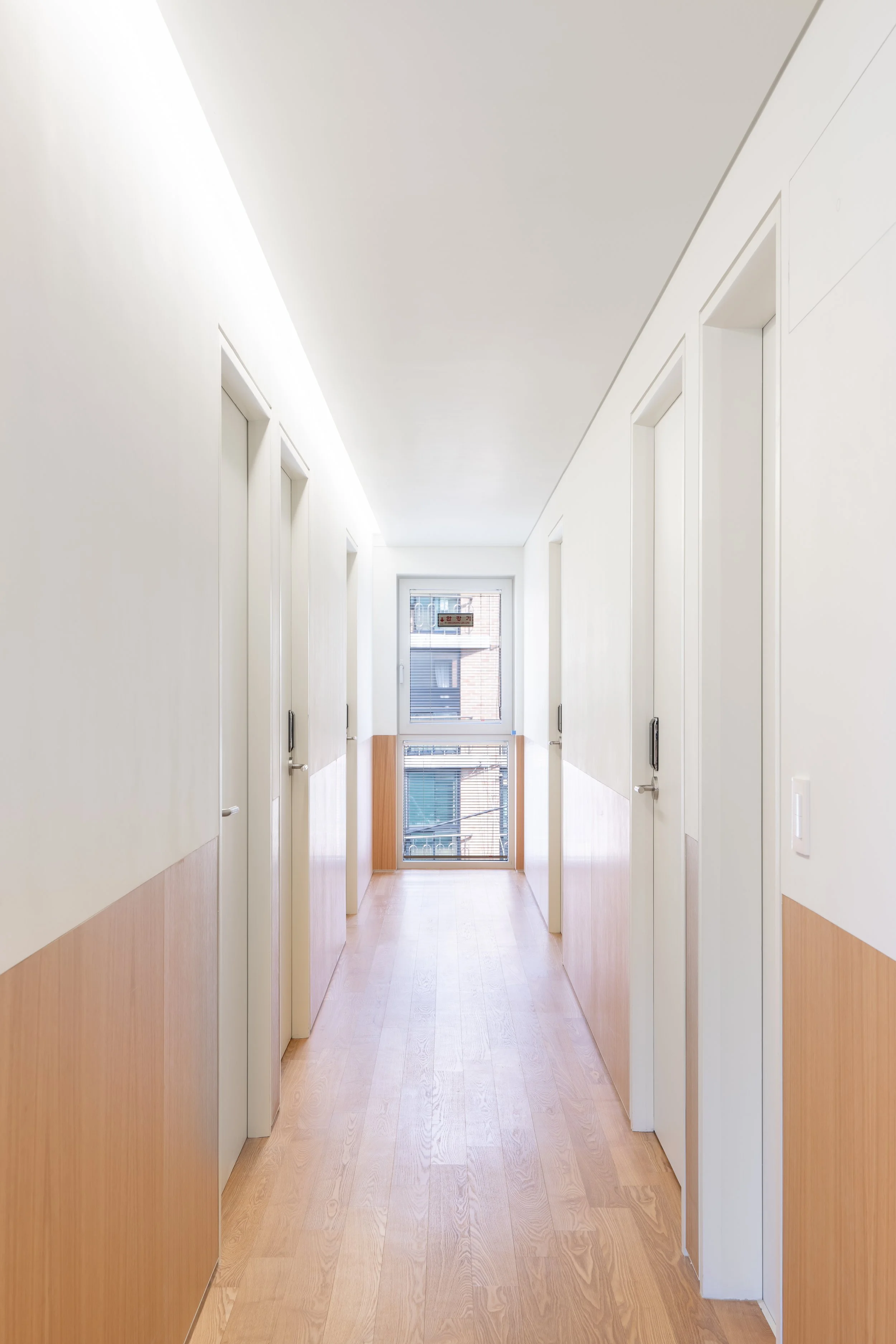
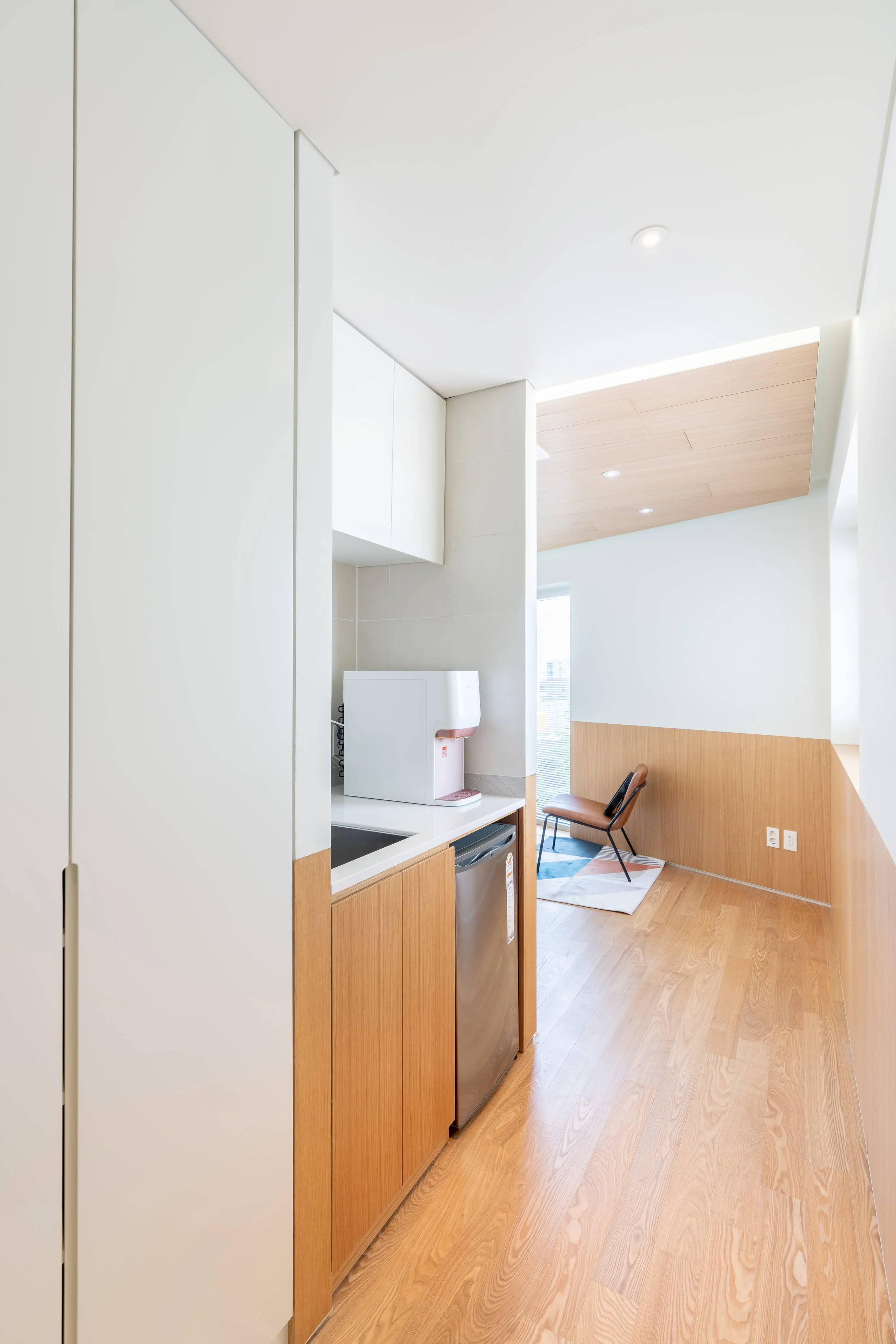
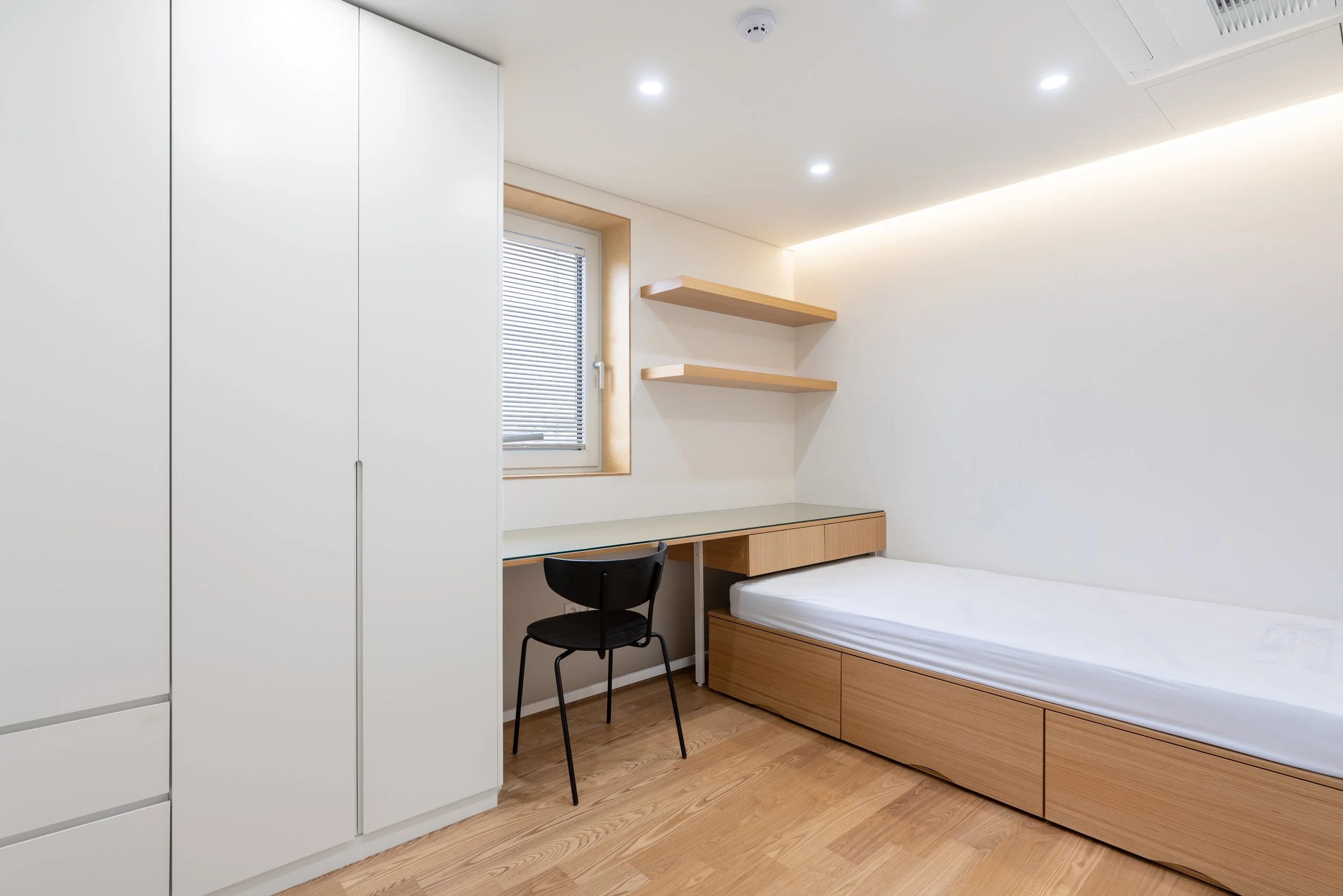
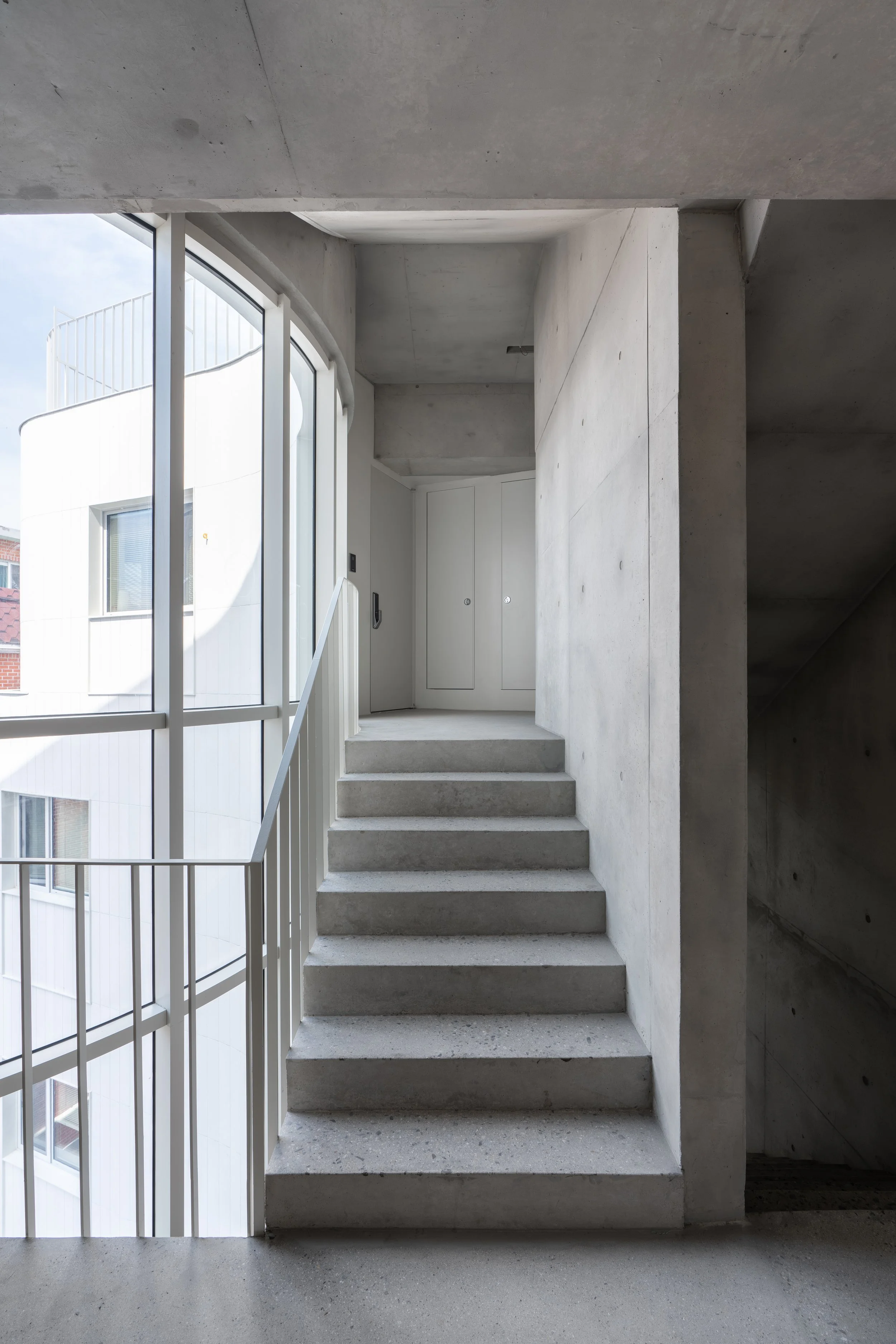
대지는 앞 뒤로 면 해 있는 두 개의 필지로, 남북으로 길고 좁은 땅이었습니다. 살짝 남서향 대지인 탓에 정북일조사선도 적용되면 더 좁고 길어질 수 밖에 없는 여건입니다. 이 상황을 역이용해서 가운데에 중정을 두었습니다. 중정을 중심으로 4-5인 주거를 한 유닛으로 해 좀 더 작은 단위세대로 나눠 앞 뒤로 배치하고, 대지 레벨의 고저차를 이용해 스킵 플로어 방식으로 앞 뒤를 연결했습니다.
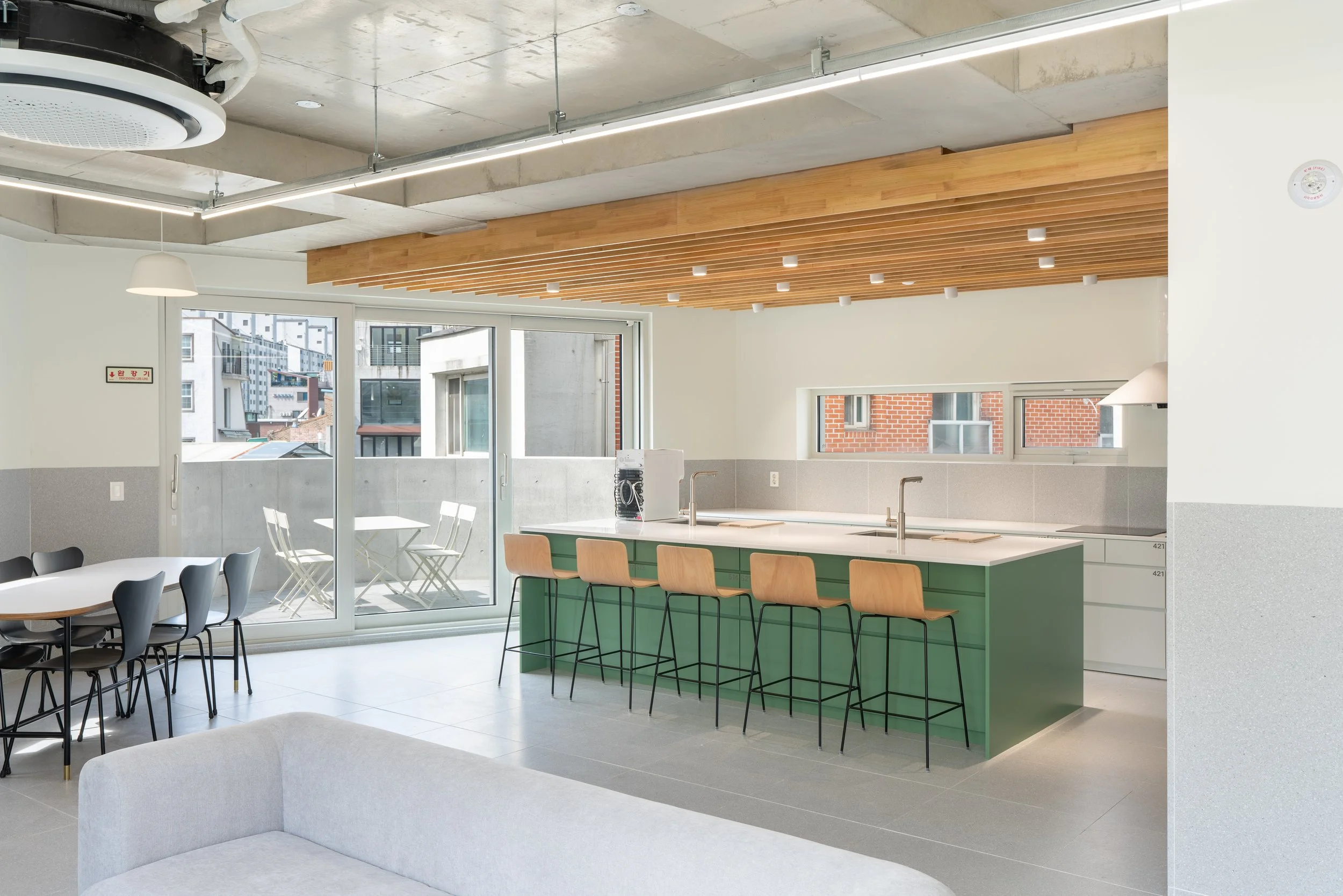
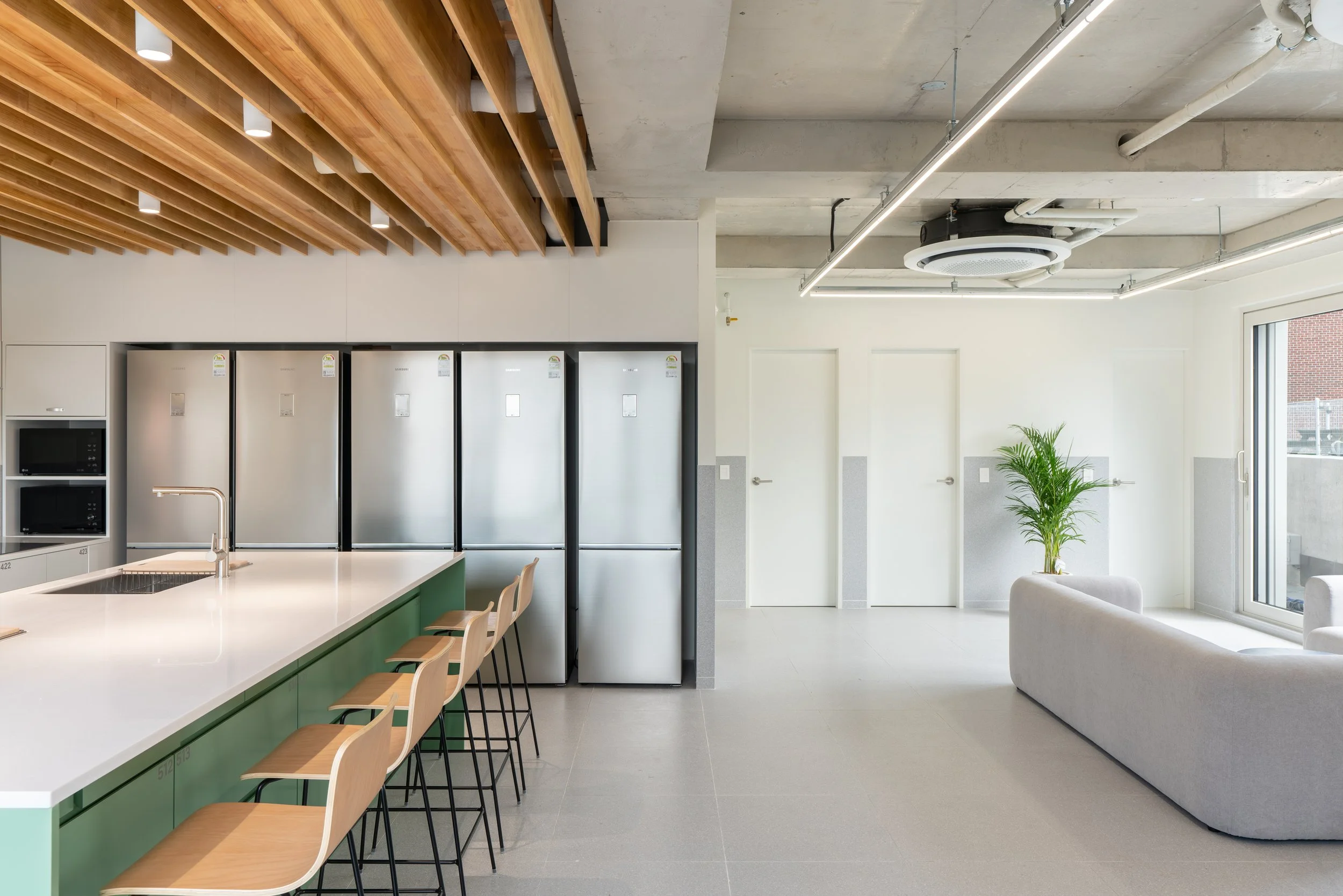
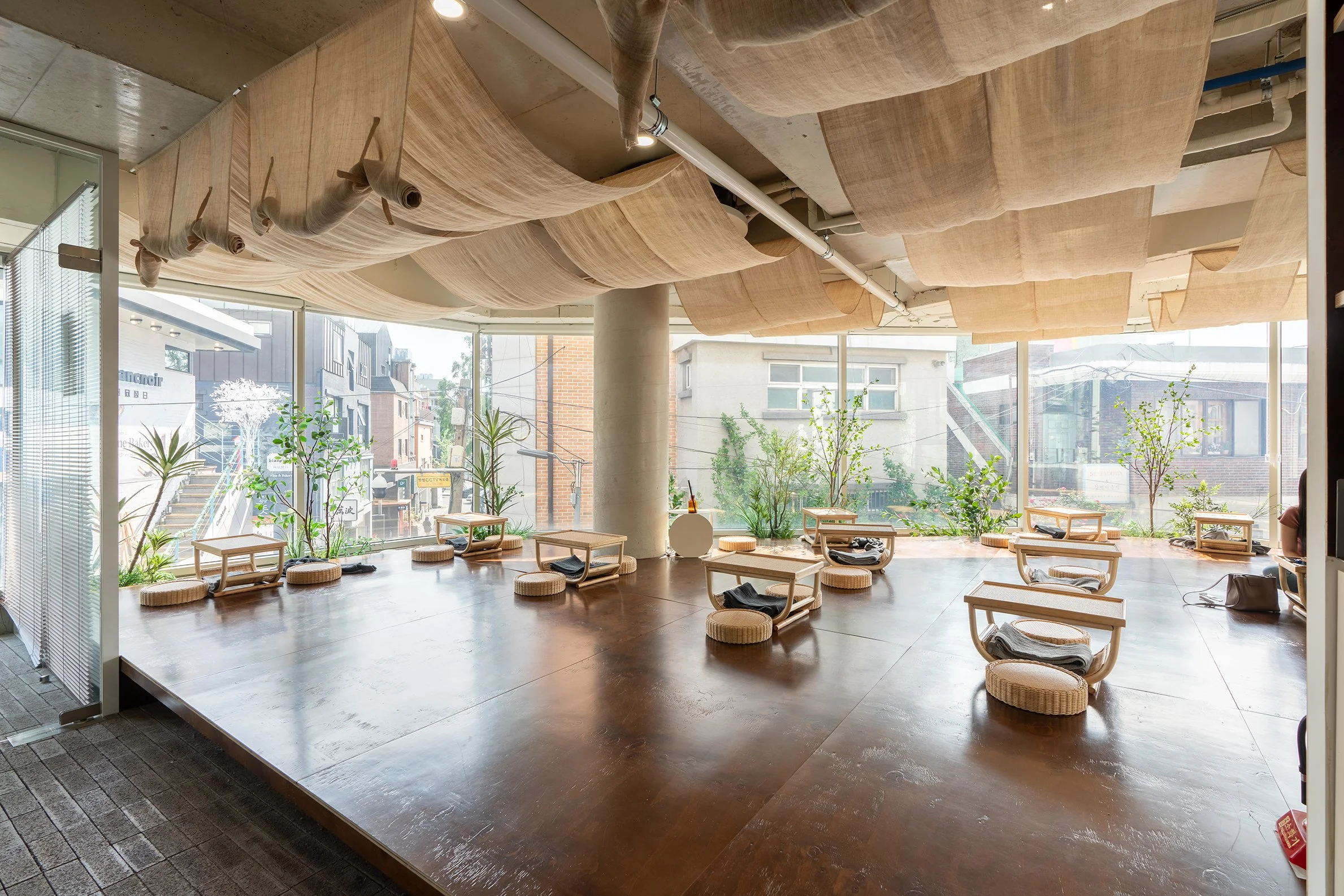
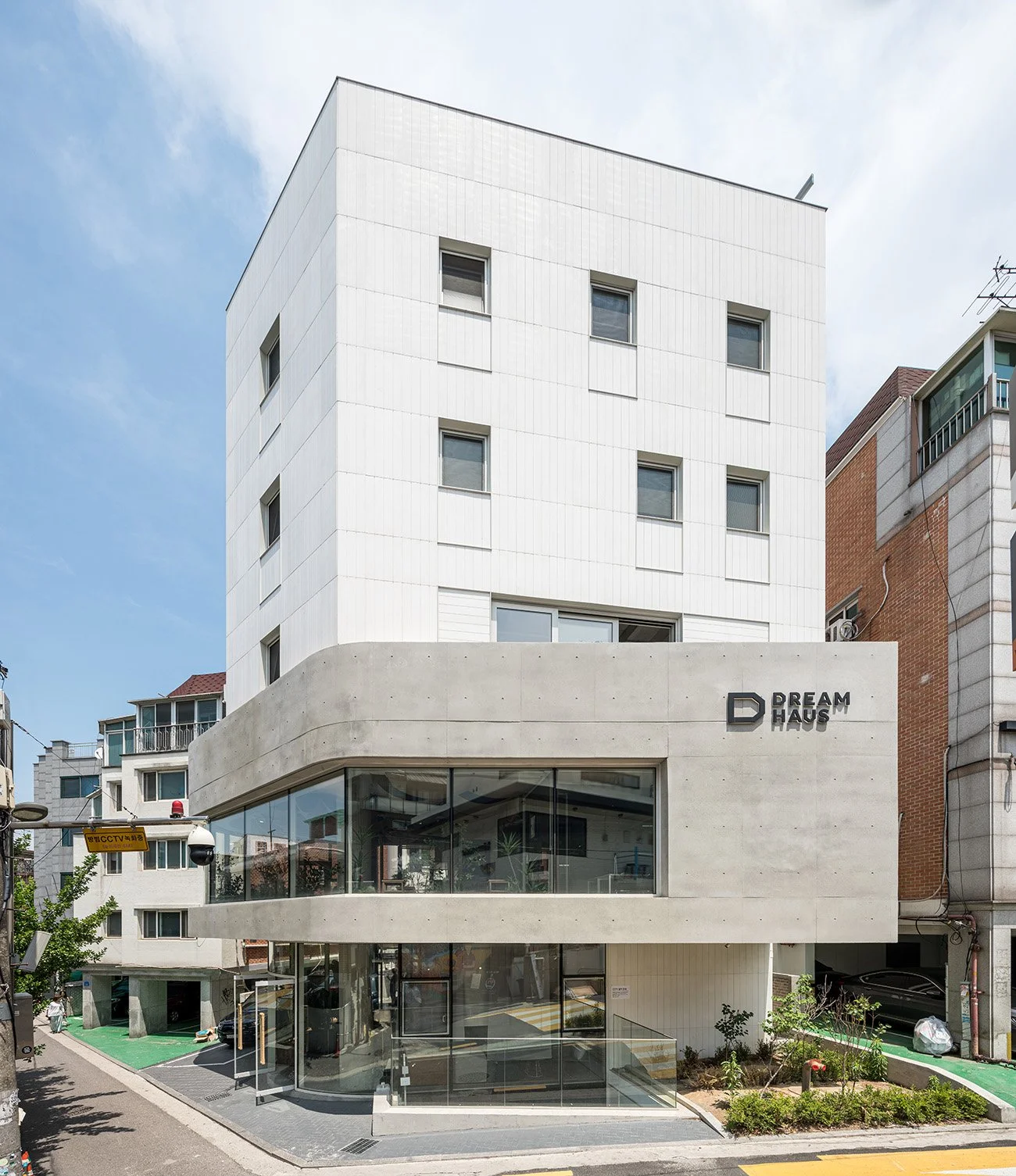
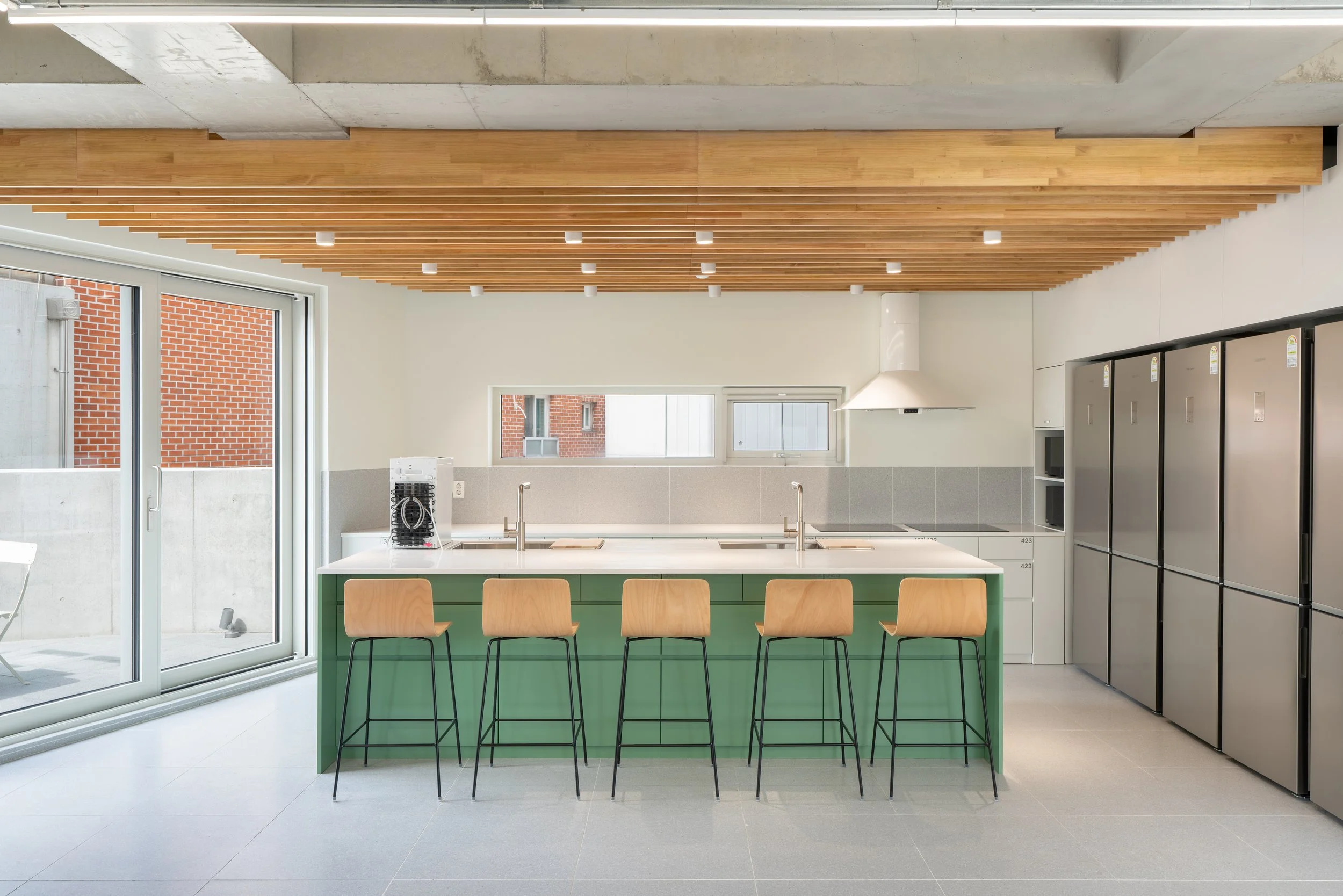
유동인구가 많은 남쪽으로는 public한 공간을 배치, 막다른 길로 인해 유동인구가 적은 북쪽으로는 private한 공간을 배치해 물리적으로 구분했습니다. 그 결과 북쪽으로는 단위세대만 배치가 되고, 남쪽 저층부는 상업시설 또는 공용공간, 프라이버시 침해의 우려가 적은 상부 쪽은 다시 단위 세대가 배치됩니다.
The site consists of two lots with street frontages at both ends, forming a long and narrow plot running north-south. Due to its slightly southwest orientation, the net buildable area would become even narrower and more elongated if strict north-facing sunlight regulations were applied. We turned this constraint into an advantage by placing a central courtyard. Around this courtyard, we organized 4–5 person residential units as a single block, which were then divided into smaller units and arranged front and back. We connected the front and rear sections using a skip-floor system, taking advantage of the site’s natural elevation differences.
Public spaces are located on the south side, which experiences higher pedestrian traffic, while private spaces are positioned on the north side, where the dead-end street reduces foot traffic, providing a clear physical separation. As a result, only residential units occupy the northern side, while the lower southern sections accommodate commercial or shared facilities, and the upper levels—where privacy concerns are minimal—are again occupied by residential units.